
The Puppy Potty Training System
Help your puppy use the right spot, with a plan for your real day.
Know when to offer a potty break, what to watch for, and what to change after an accident. Get a personal starting plan, a practical 14-day program, and clear next steps for the moments that keep going wrong.
- Fit the routine around waking, meals, play, and your household.
- Handle empty trips, nighttime needs, and repeat accidents with a clear next step.
- Use the guide, printable worksheets, and browser tools together.
One-time purchase. Digital tools and downloadable PDFs.

You are taking your puppy out. So why is there another puddle?
You can follow the usual advice and still get stuck between one trip and the next. The missing piece is often a workable sequence: what happened, who was watching, and what needs to happen now.
You spend time outside, nothing happens, and your puppy pees after coming back in.
A nap, a meal, or a burst of play changes the day, but the schedule stays the same.
Nobody knows whether the last trip included an actual pee or just a visit to the yard.
A busy evening, an elevator ride, or a night waking leaves you improvising again.
The routine, reference and practical tools in one system.
Start with your day. Leave with a plan you can use.
Answer nine practical question groups about your puppy, daily anchors, toilet access, and care. See how your real day becomes a starting routine you can print, save, and update.
- Your daily anchors
- Your care arrangements
- Your separate night plan
You bring the details of your household. The starting plan brings them together, so your next decision has something practical behind it.
See what is included →A glimpse of the structure. Your full starting plan is part of the system.
“We just came back in. How did this happen again?”
You took your puppy outside. Nothing happened. Eight minutes after coming back in, there is pee beside the couch.
The guided tool starts with the situation:
The full tool guides you from the answers to an adjustment.
An accident should give you a next step.
Get a specific next step for the situation you describe.
See which part of the routine to review, without changing everything at once.
Know what to watch next so the next event gives you useful information. Ten guided problem patterns are included.
You do not need to retell the whole week to find the relevant help. Start with what just happened and work from there.
One complete system, ready to work together.
A usable plan on a busy day. A guide when you need context. Working pages to keep the important details together.
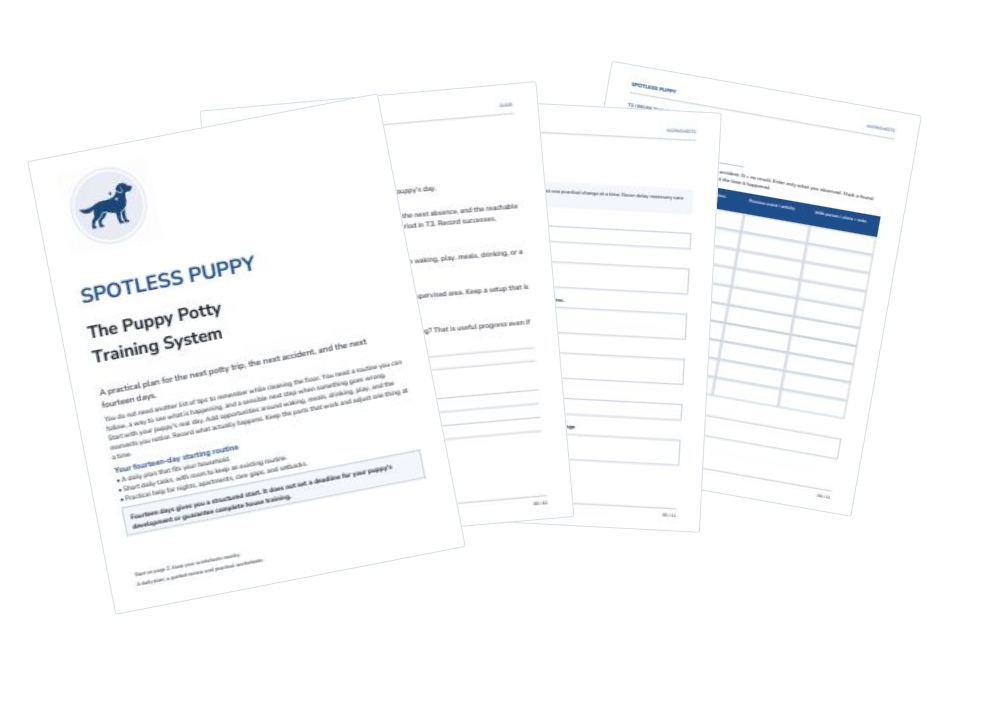
A look inside the actual guide and worksheets.
- The 42-page practical guideQuick start, fourteen daily task pages, and reference help for rewards, supervision, cleanup, nights, care gaps, apartments, and setbacks. Read the part you need instead of searching through hours of lessons.
- Your personal starting-plan builderNine practical question groups turn your household information into a starting routine. Print the plan or save it as text. Use the separate night card and adjust the routine from real observations.
- The guided troubleshooterWork through ten familiar problems, including accidents after returning, empty trips, repeat spots, nighttime accidents, and difficulties during indoor-to-outdoor transitions.
- Ten reusable worksheetsEleven printable pages covering the daily plan, event reminders, one shared log, daily review, night plan, caregiver handoff, care gaps, transitions, more space, and your next seven days.
- The event log and 14-day browser programRecord successes, accidents, and no-result trips in one place. Follow the daily tasks on screen, print what you need, and export your event records.
Less guessing between one trip and the next.
The difference is not having more advice to remember. It is having a way to use the advice in front of the puppy you actually have.
- 01
Know which everyday moments need an opportunity, even when they fall between reminders.
- 02
Give the next caregiver useful information instead of 'I think the puppy went out.'
- 03
Find a specific adjustment after an accident instead of changing five things at once.
- 04
Keep a routine that works for your household, including apartments, indoor options, and busy care periods.
- 05
See what is improving without mistaking one quiet day for finished house training.
For the puppy owner who wants to know what to do next.
Maybe this is your first puppy. Maybe you have raised a dog before, but this puppy and this household need a different rhythm. You do not need to become a training enthusiast to want a cleaner floor and a calmer day. You need an approach you can understand, repeat, and hand to the other person looking after your puppy.
Spotless Puppy gives you a structure to use while your puppy learns. Your attention still matters. The point is to make that attention easier to direct, so you can spend less time wondering which advice applies to the situation in front of you.
You will feel at home here if:
- You are willing to stay involved, but you want the decisions to feel less scattered.
- You have read general advice and now need to connect it to waking, meals, work, and bedtime.
- You want support for the setbacks, not just instructions for the ideal day.
- You prefer a practical guide and useful tools to another large video course.
Before you buy
The 14 days describe the program, not a guaranteed finish date.
If your concern needs individual medical or behavioral assessment, seek appropriate professional support. The system does not replace that care.
Fourteen days of useful actions. No marathon course.
A clear focus for each stage, with room to repeat a day when your puppy or household needs more time.
DAYS 1-3
See the pattern. Set up the routine.
Begin with a manageable care period and a clear record of what happens. Build from your actual puppy's day.
- Check the setup, night care, and the next absence.
- Catch one missed transition, such as waking from a nap.
- Get the reward to the right place at the right moment.
DAYS 4-7
Make the difficult moments manageable.
Work on the parts that tend to unravel: busy periods, empty trips, and night arrangements. End the week with one supported decision.
- Name the caregiver for a busy window.
- Use a clear follow-up after a trip with no result.
- Review nights separately and keep what worked.
DAYS 8-14
Build consistency and choose what comes next.
Repeat useful routines, improve handoffs, and prepare for ordinary life. More space is an optional, supervised step when observations support it.
- Notice individual signals and address repeat spots.
- Check care coverage before a busy day.
- Choose the next week's routine from a fair comparison.
Fourteen days is a starting framework, not a promise that every puppy will be fully house trained by day 14.
Use the part you need today. Keep the rest close.
Open Start Here and get your bearings.
The package gives you a clear starting point instead of a folder full of unexplained bonuses. Follow the quick start, check your setup, and choose whether to make your plan in the browser or on the printed worksheet. Both belong to the same system.
Take one focused task into your day.
Each daily page gives you a goal, an action, something to watch, and a check at the end. You do not have to invent the next lesson or finish a long module before doing something useful. Repeat a step when your household needs more time.
Come back with the situation that actually happened.
When a familiar problem turns up, go to the matching reference page or guided tool. Keep the daily record in one place, then use it to choose the next adjustment. The guide, worksheets, and tools use the same structure, so you can move between them without learning a second method.
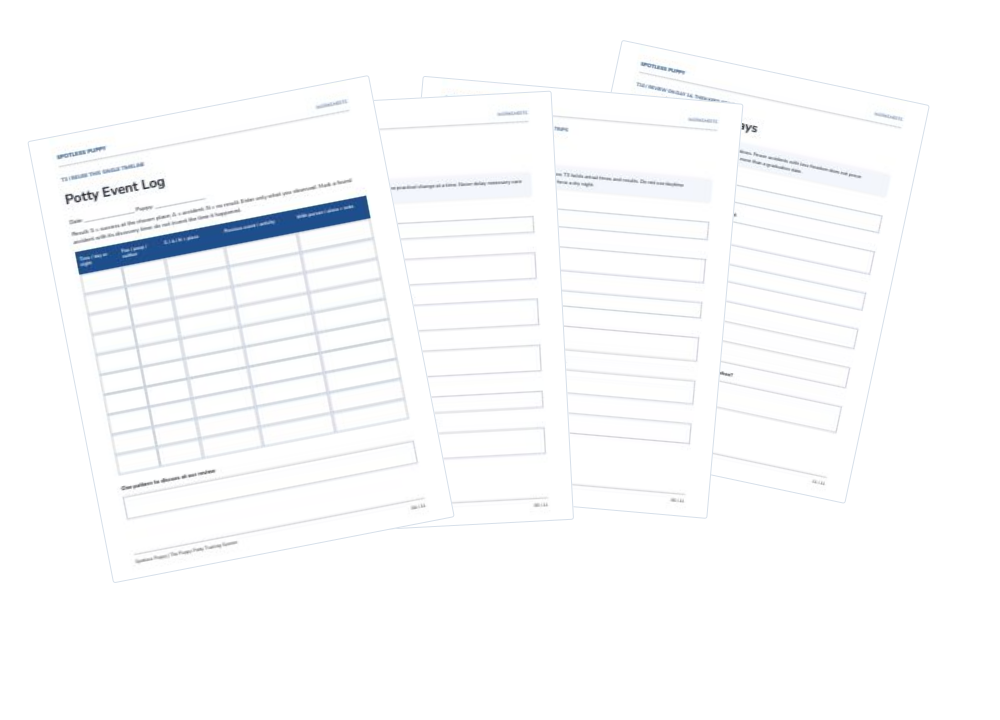
Made to use, not just to read.
There is no need to keep a video playing beside the back door. Print the pages you want handy, use the browser tools when they help, and return to the guide when you need context. The format is designed around doing the work in an ordinary household.


What Emma taught me about routine.
During Emma's first weeks with us, I stayed close to her day and night. She was a Greater Swiss Mountain Dog puppy. We played, practiced simple commands, gave her time to sleep, and took her outside regularly.
We made the final evening trip part of a familiar sequence, even when she had not given an obvious signal. That did not mean she slept through immediately. She still woke at night at first, and a rhythm developed gradually over those weeks.
One evening, Emma drank from a freshly filled bowl shortly before bedtime. About half an hour later she needed another trip. We were not restricting water. We were learning to account for what had happened before expecting her to settle.
My takeaway was simple: stay involved, repeat a recognizable routine, and notice when your puppy needs you to change it. Emma's experience is part of the guide as a personal account, not a deadline for another puppy.
Get the complete Spotless Puppy system.
You have enough to think about with a new puppy. Put the daily routine, the useful records and the next adjustment in one place.
- 42-page guide with the full 14-day program
- Personal starting-plan builder and separate night card
- Guided help for ten common potty-training problems
- Ten reusable worksheets across eleven printable pages
- Browser event log, daily tasks, printing, and exports
No long course to work through before you begin. Start with the practical setup and use the rest when you need it.
Spotless Puppy
The Puppy Potty Training System
$37
USD • One-time purchase
Digital files. No physical shipping or subscription. Use the guide and worksheets offline, with browser tools included.
Your puppy's progress sets the pace. Individual results vary.
Before you bring it home.
The practical questions, answered.
Will my puppy be fully house trained in 14 days?
Fourteen days is the guided starting program, not a biological deadline. You will work on a usable routine, record real events, and choose what to keep or adjust. Some puppies need longer, and the guide includes a next-seven-days plan so you can continue. You keep access to the files you download; the program does not expire because you need to repeat a day.
Who is this made for?
The core program is built for owners of young puppies, roughly 8 to 24 weeks old. Older puppies or puppies of unknown age can still use the care, observation, and reward principles. A sudden change in previously reliable habits needs a veterinary conversation rather than an assumption that training alone will fix it.
Can I use it in an apartment?
Yes. The planner asks about access and travel time, and the guide addresses stairs, elevators, reachable indoor toilets, and gradual transitions outdoors. The right starting arrangement is one your puppy can actually reach. Ask your veterinarian about safe outdoor locations if that is uncertain.
What if I work away from home?
Use the care-gap worksheet and planner to identify who covers each period or how appropriate toilet access will work. The system makes uncovered time visible. It does not assume a puppy can wait through a workday or turn a long absence into a safe crate period.
My puppy uses pads. Do I have to remove them?
No. An intentional indoor toilet can be the current successful target. If your goal is outdoors, the transition worksheet helps you choose a small next step while keeping a usable arrangement. There is no automatic pad-removal day.
Do I need a crate?
No. A suitable pen, gated area, or directly supervised puppy-safe space may support your routine. A crate is optional and requires comfortable, positive introduction. The program does not use forced confinement or punishment.
Does it help with nighttime accidents?
It includes a separate night plan, a daily night-review task, and reference guidance. You use actual waking and accident observations to organize care. There is no universal overnight interval, and the system does not restrict water to force dry nights.
What if the accidents have a medical cause?
The guide and tools put health concerns first. They cannot diagnose or rule out illness. Blood, pain, changed thirst, repeated small amounts, or a sudden setback call for veterinary advice. Inability to urinate or repeated straining without urine needs emergency veterinary help immediately.
What do I receive, and how do I use it?
You receive a digital package with a Start Here page, PDF guide, printable worksheet PDF, and browser tools. Open Start Here and follow the links. The guide and blank worksheets let you run the same routine without the tools. You can read on screen, print the pages you use, or combine both. You do not need to print forty-two pages before beginning. No physical product is shipped.
Do I need an app, an AI subscription, or another monthly payment?
No. The tools run in a browser from the supplied files and do not need an AI service or account. There is no Spotless Puppy subscription. Tool entries are stored in that browser on that device where storage is available, so export important records and do not expect automatic syncing between devices.
One purchase. A connected set of practical tools.
Make the next potty trip part of a clearer plan.
Start with the day you actually have. Give your puppy useful opportunities, keep a record you can learn from, and know what to do when the routine needs a change.
Get Spotless Puppy - $37